The Challenge
Home Depot’s technology organization had a vision: every decision driven by customer needs. But for most teams, “customer” didn’t mean shoppers — it meant fellow associates, back-office users, and platform teams.
Only 17% of OKRs measured customer impact. Teams ranged from those who’d never spoken to their customer to seasoned practitioners with weekly feedback loops. One framework had to serve them all.
The Approach
The breakthrough came from reframing the work. Instead of building standalone tools, I built wayfinding. Instead of adding new tasks, I created a lens on existing work.
Mapping the Maturity Spectrum
Assessed teams across the organization to understand where they fell on the CX maturity scale — from teams who’d never had a customer conversation to those running weekly feedback synthesis. This mapping informed tiered standards that showed progress without retroactively failing current teams.
Designing the Three-Pillar Framework
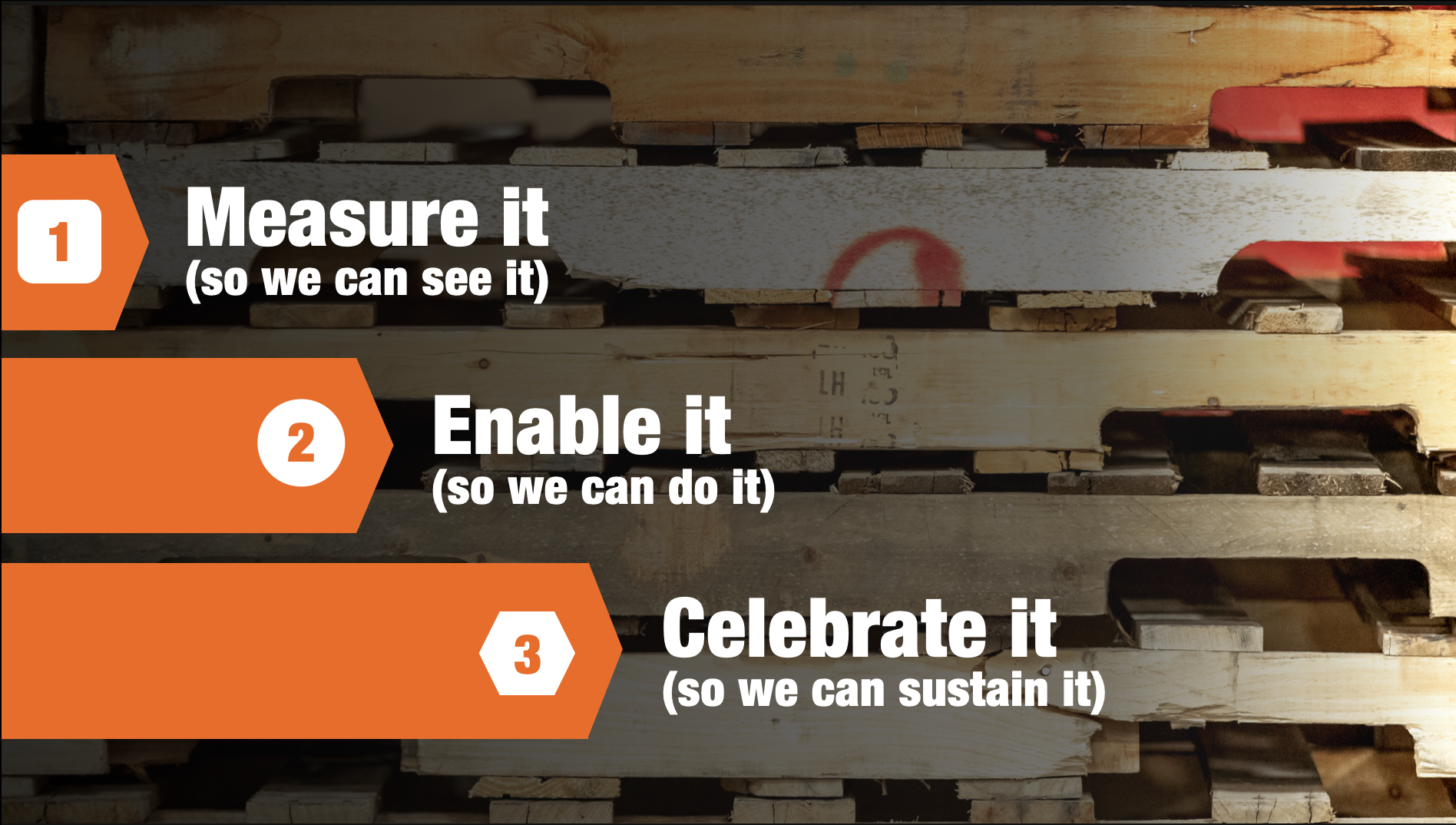
Built an interconnected ecosystem — Make It Visible, Make It Easy, Make It Stick — where measurement surfaces behaviors, enablement makes those behaviors accessible, and celebration sustains them over time. Each pillar reinforces the others rather than operating in isolation.
Building for Every Audience
Created an executive planning deck and modular walking deck that flexed for VPs through frontline teams. Practical tools were designed for the full maturity spectrum — from templates for a team’s first customer conversation to frameworks for advanced feedback synthesis.
Pressure-Testing with Associates
Treated enablement like a product. Materials were tested with actual associates to ensure they worked in real contexts — not just in presentation rooms. The recognition ecosystem was designed to reinforce the behaviors that measurement surfaced.
The Results
Before
17% of OKRs measured customer impact. Teams had no shared definition of what 'customer-first' meant in practice.
After
Tiered OKR standards (Baseline to Gold Standard) gave every team a clear path from their current maturity level to measurable customer impact.
What Was Delivered
- Three-pillar framework (Make It Visible, Make It Easy, Make It Stick) functioning as an interconnected system
- Tiered OKR standards from Baseline to Gold Standard, informed by $70M+ documented outcomes
- Executive planning deck and modular walking deck flexing for VPs through frontline teams
- Practical tools designed for the full maturity spectrum — from first customer conversation to advanced feedback synthesis
- Recognition ecosystem reinforcing measurement and enabling sustained behavior change
What This Demonstrates
This engagement illustrates what it takes to drive cultural transformation at enterprise scale. The framework wasn’t just a measurement tool — it was an operating system that connected visibility, enablement, and motivation into a self-reinforcing cycle. The materials were designed to be used, not filed away — and the tiered approach ensured that no team was left behind regardless of where they started.