The Problem
My son Hunter is on the autism spectrum. Social stories — short, illustrated narratives that explain unfamiliar situations — are one of the most evidence-based tools for helping autistic children navigate their world.
For Hunter, they worked. But only when they were personal.
A generic story about “a child” going to “the dentist” didn’t land. A story about Hunter, who loves Harry Potter, going to Dr. Chen’s office where the walls are blue and there’s a fish tank — that landed. Personalization wasn’t a nice-to-have. It was the mechanism of action.
The Research
Before touching a wireframe, I spent time in the problem space the same way I would for any client engagement.
Who I talked to: Parents of autistic children. Special education teachers managing IEP goals. Speech-language pathologists. School counselors.
What I found: Three audiences, one root cause.
- Parents were creating stories exhausted at night, using tools not built for the task. Many simply stopped — even though the stories helped.
- Educators had the methodology knowledge but not the time. A teacher with 5 IEP students can’t hand-craft personalized narratives for each.
- Therapists were the most methodologically rigorous — and the most time-constrained.
Everyone needed the same thing: high-quality, personalized social stories without the manual labor.
Phase 1: The False Start
I built for two months in FlutterFlow. Screens came together, database schema took shape, AI generation connected.
Then the cracks became fractures. Bloated code. Edge cases the visual builder couldn’t handle. iOS build failures. After two months, I had an app that kind of worked on Android and didn’t work on iOS.
I shelved it.
The Turning Point
For eighteen months, GrowTale lived as Figma files, a Miro board, and a lingering frustration.
What changed was the tooling. When I encountered Claude Code, something clicked. This wasn’t a low-code visual builder. This was a collaborative development partner that could translate architectural intent into production code.
Phase 2: Three Weeks to Production
Two decisions before writing a line of code:
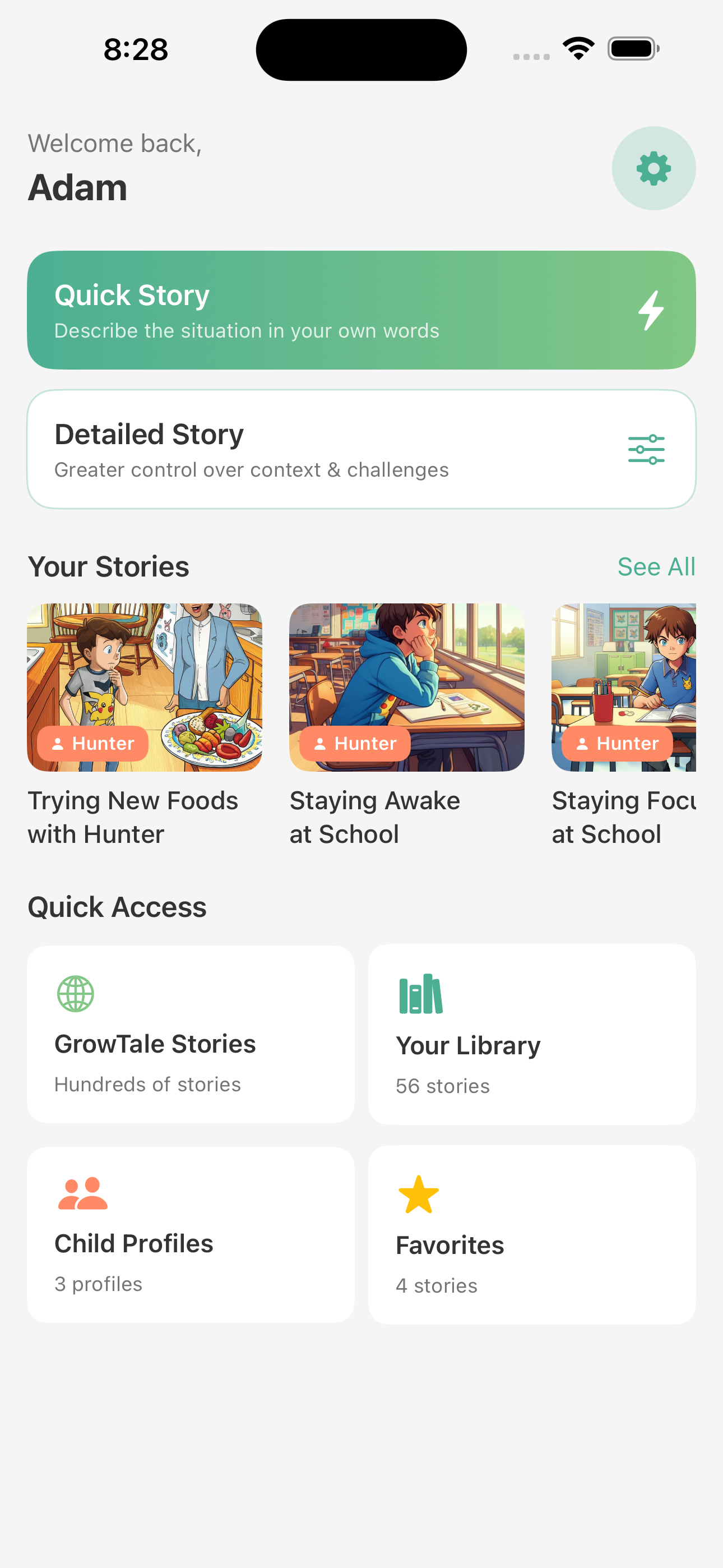
Web app, not native mobile. Responsive, instant deploys, no App Store gatekeeping.
Ship daily, not plan monthly. Real users from week one.
Week 1 — The Core Loop
Marketing site. Authentication. AI story generation. Stripe payments. Reading experience. By day seven: sign up, create a child profile, generate a story, read it.
Week 2 — Depth and Polish
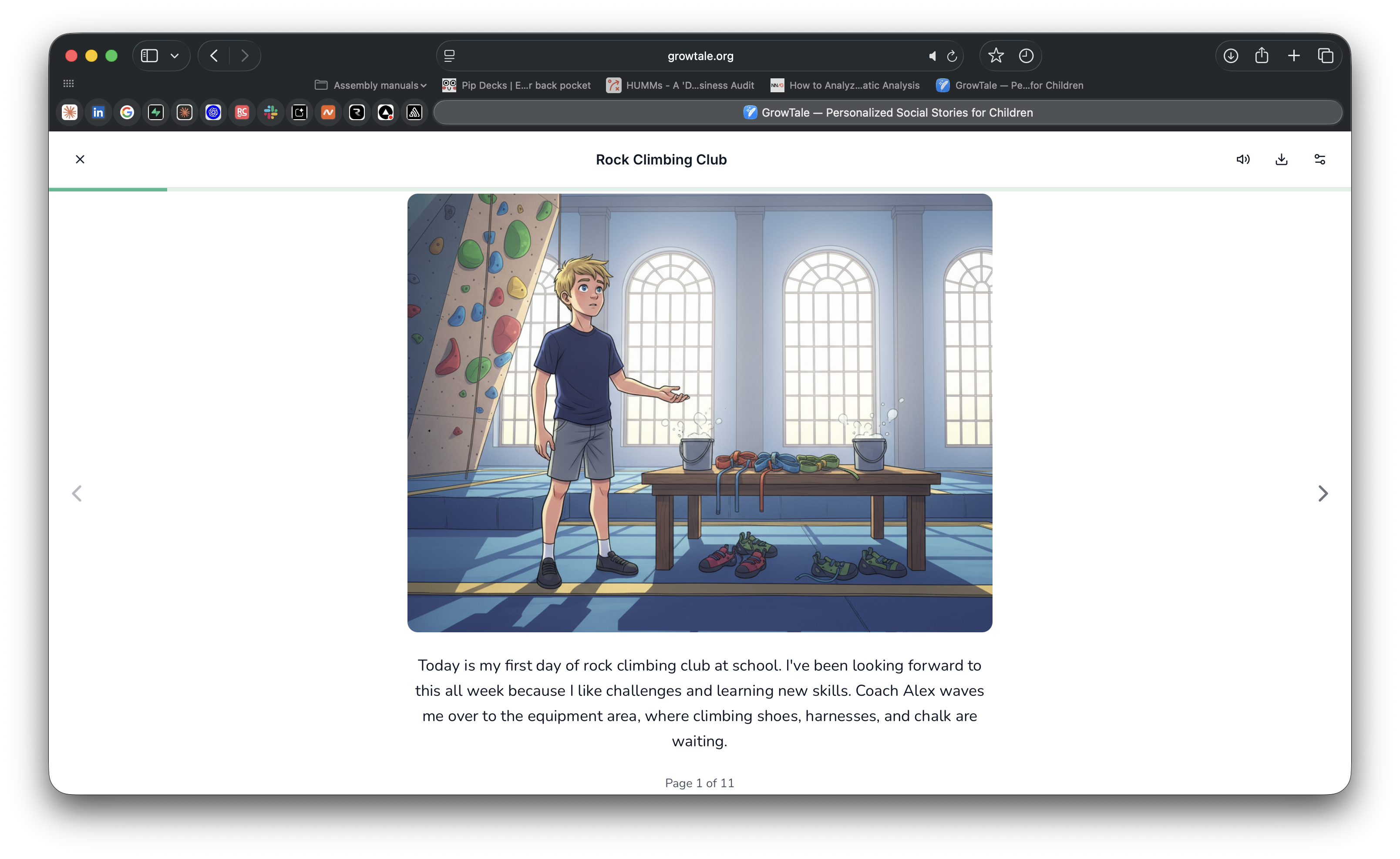
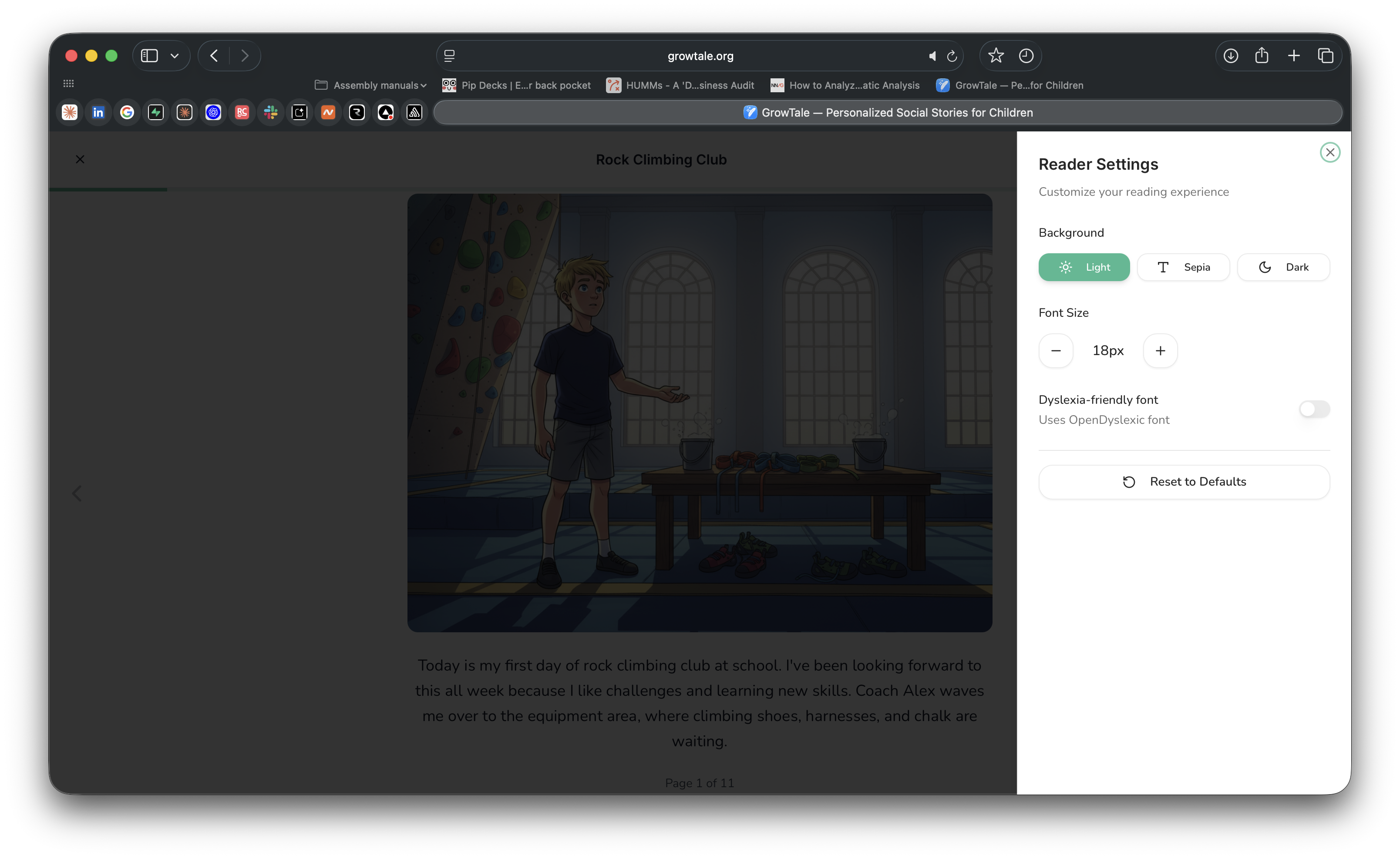
Free story library. PDF printing (standard and saddle-stitch booklet). Audience-specific landing pages. Deep child profiles. Text-to-speech. Three reading themes, adjustable fonts, dyslexia-friendly toggle.
Week 3 — Scale and Reliability
Admin dashboard with batch generation. Sentry monitoring. Auth resilience, error states everywhere, stuck-generation detection with auto-retry. SEO infrastructure with structured data and dynamic sitemap.
The Product
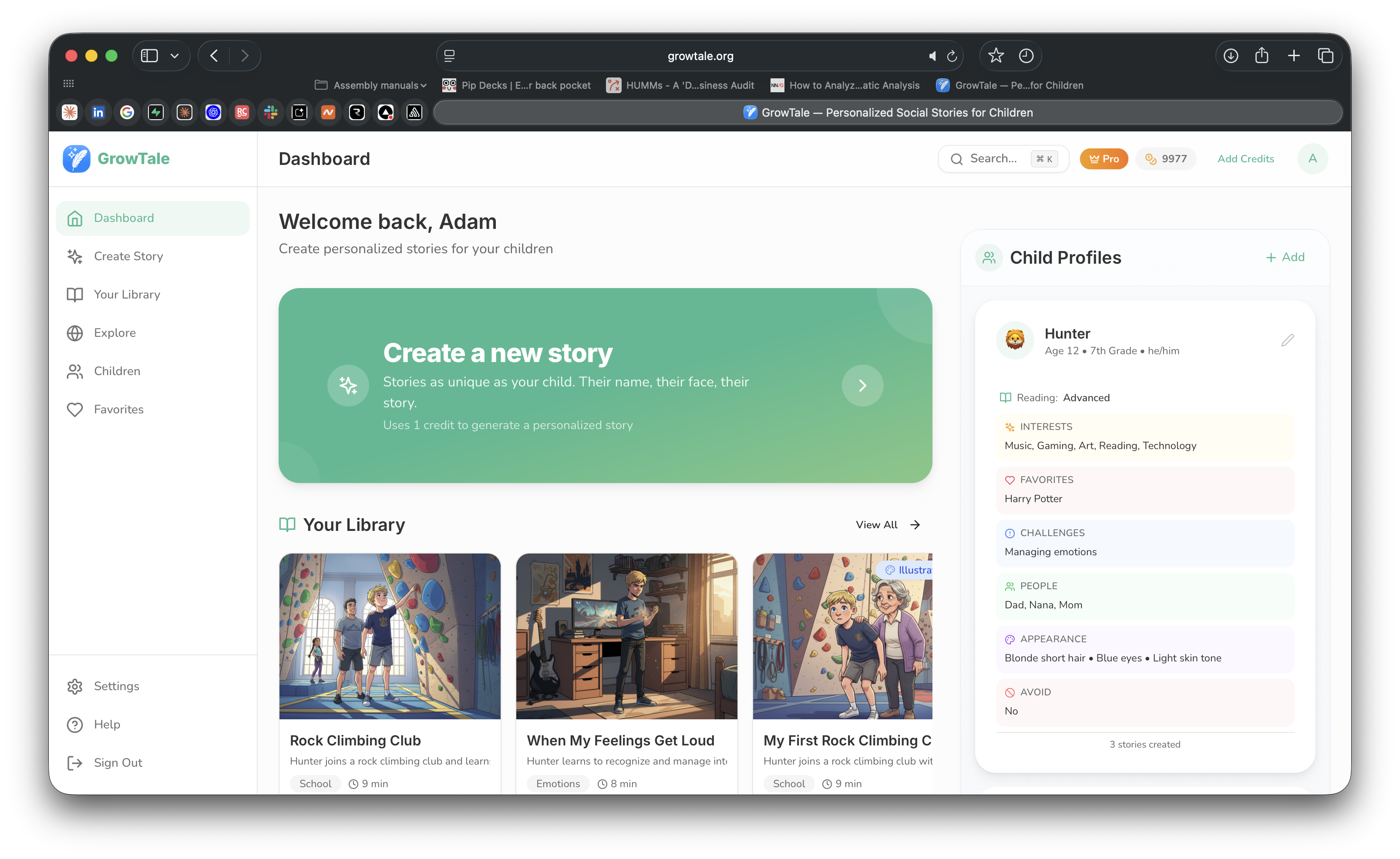
Every feature was filtered through one principle: design for the context of use, not the ideal scenario. The person using GrowTale is tired — a parent after bedtime, a teacher on Sunday night, a therapist between sessions.
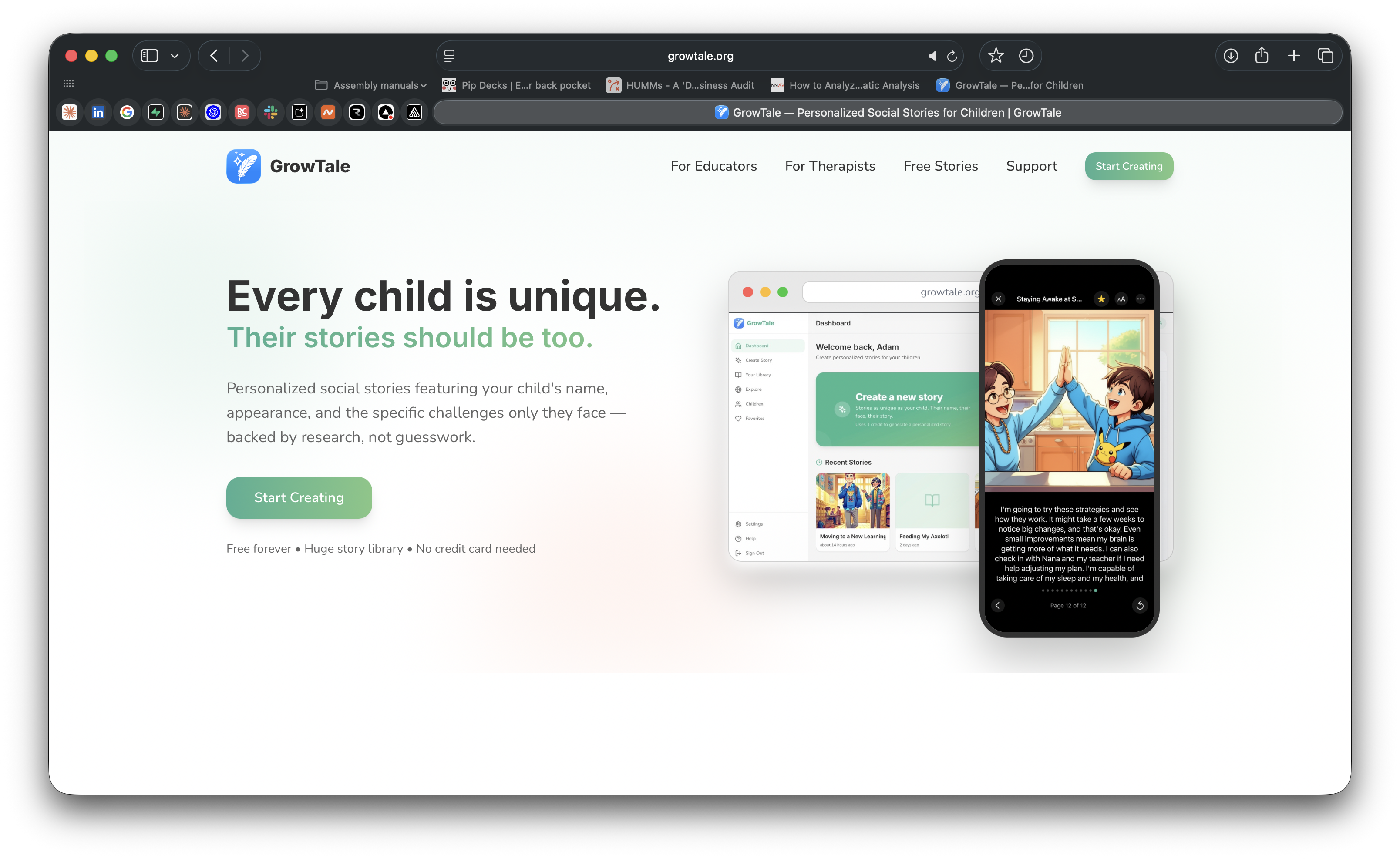
Homepage & Marketing
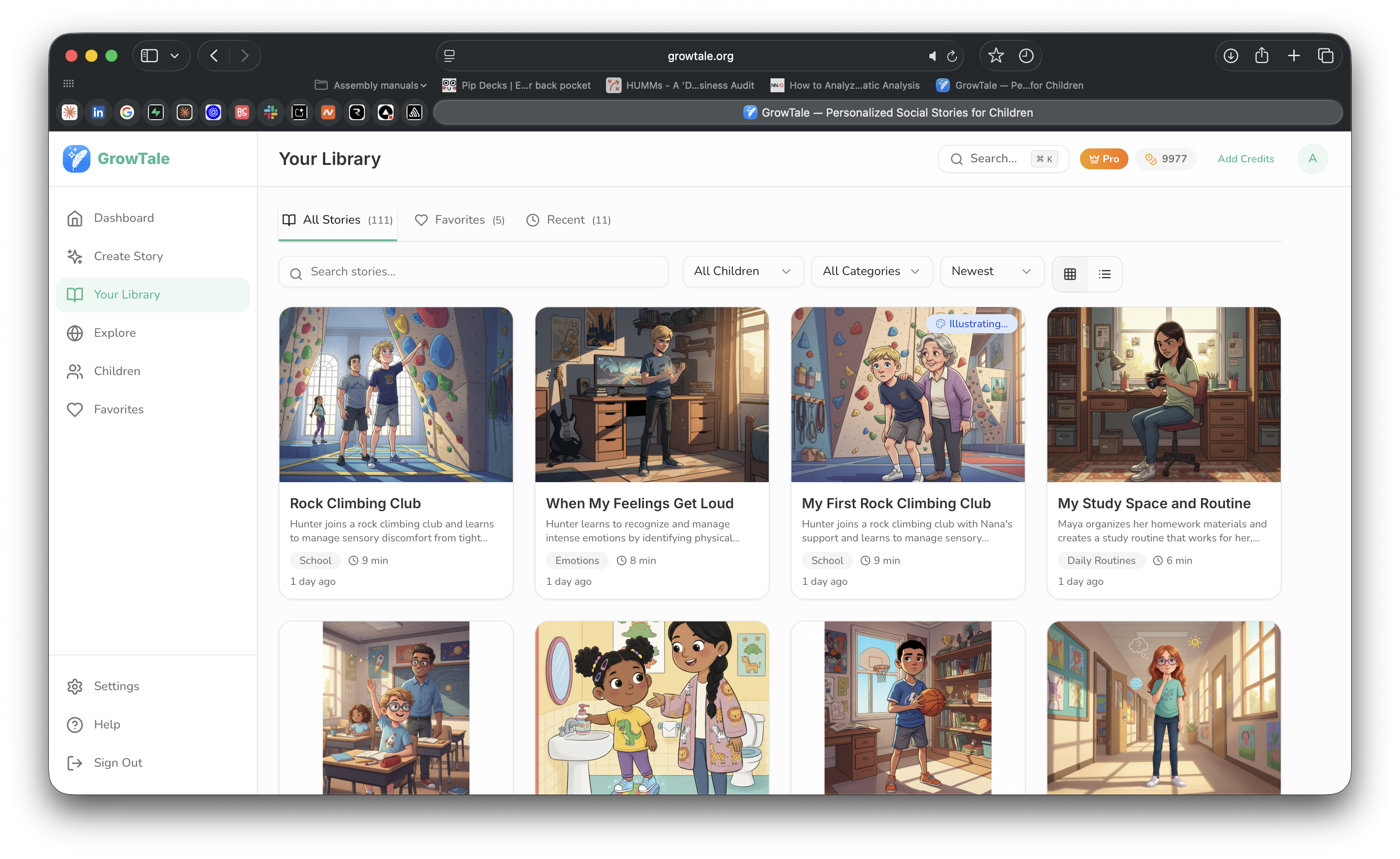
Story Library
Creation Experience
The 30-second path: Pick your child. Tap a quick-challenge pill. Hit “Create Story.” Done.
The 2-minute path: Review AI topic suggestions. Write a custom topic. Add emotional context. Set a learning goal. Choose an art style. Expand advanced options.
Complexity reveals itself as the user demonstrates intent — it doesn’t hide behind a menu.
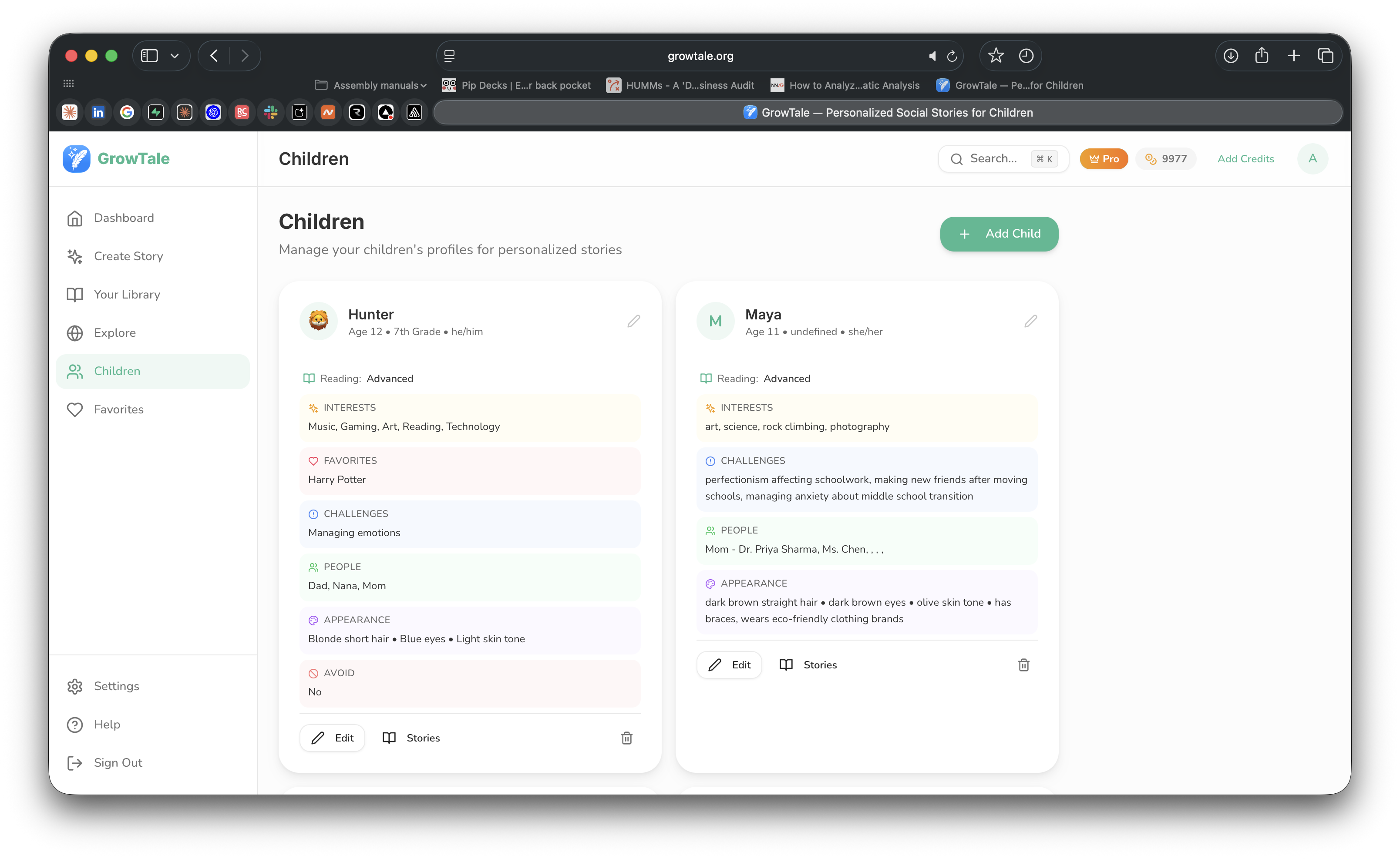
Child Profiles
Reader Experience
The children using these stories have dyslexia, autism, ADHD, visual processing differences, and sensory sensitivities.
Cross-Platform
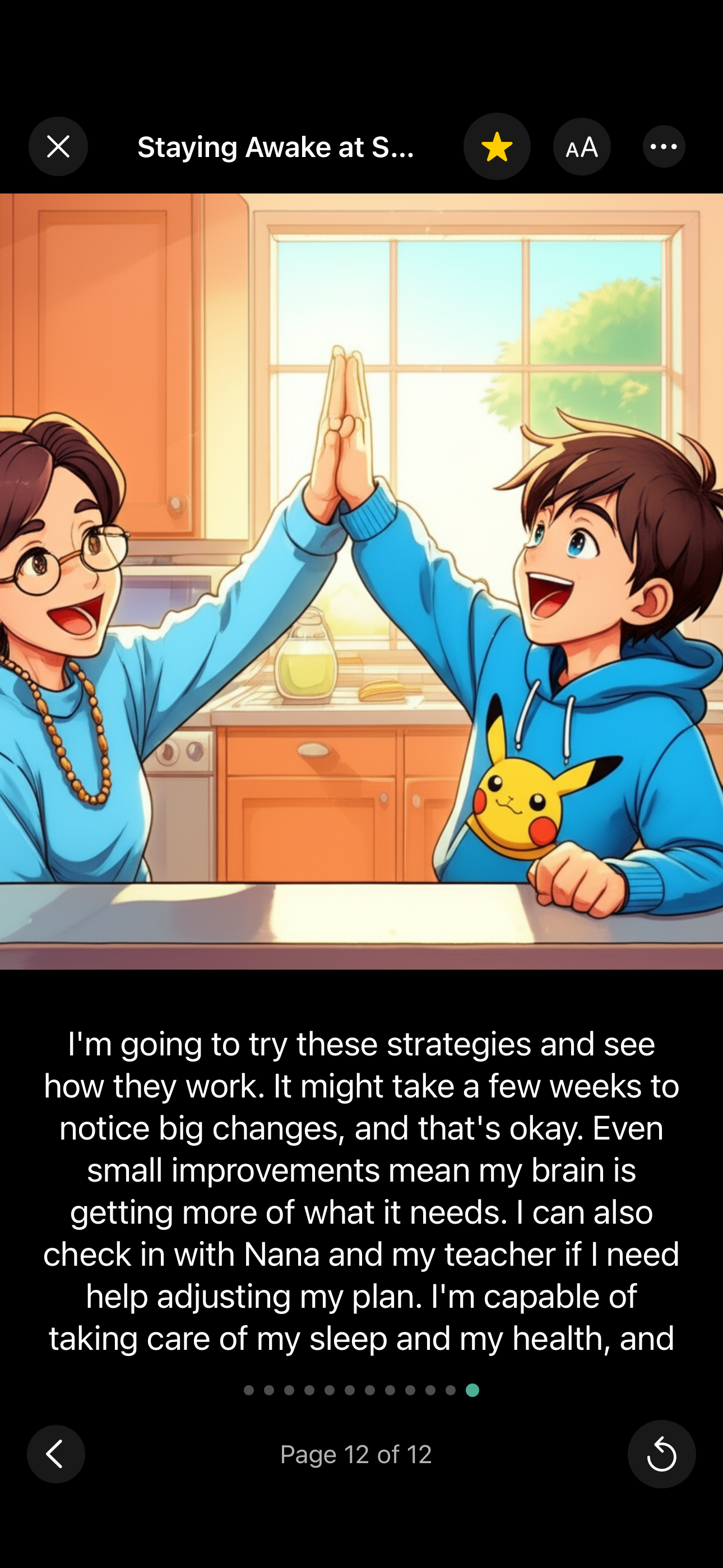
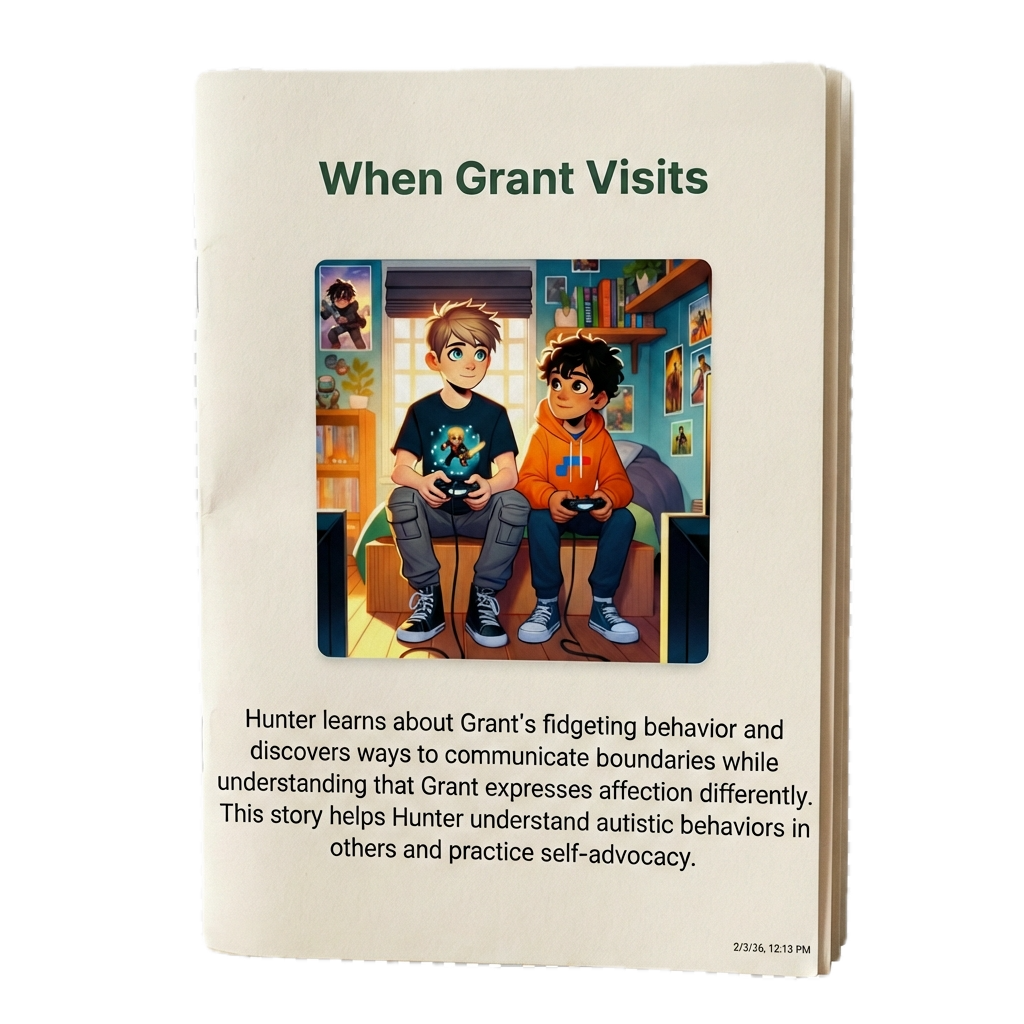
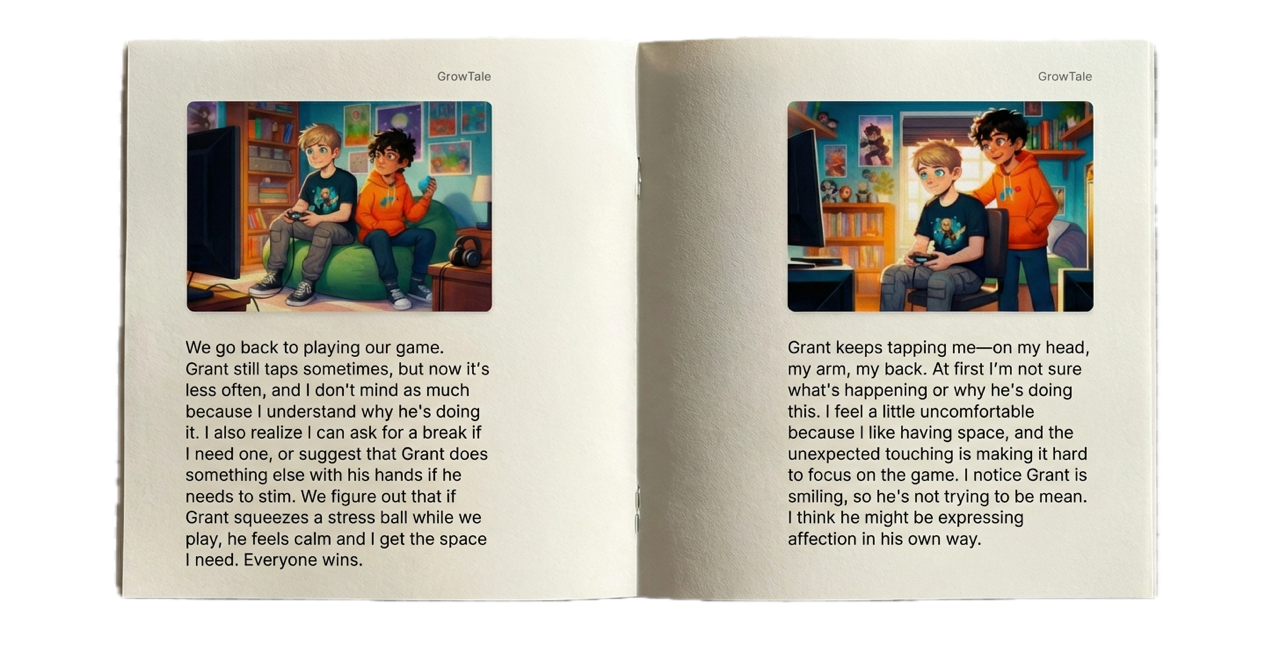
Print Experience
Social stories often need to be physical — carried in backpacks, taped to desks, brought to therapy.
Quality System
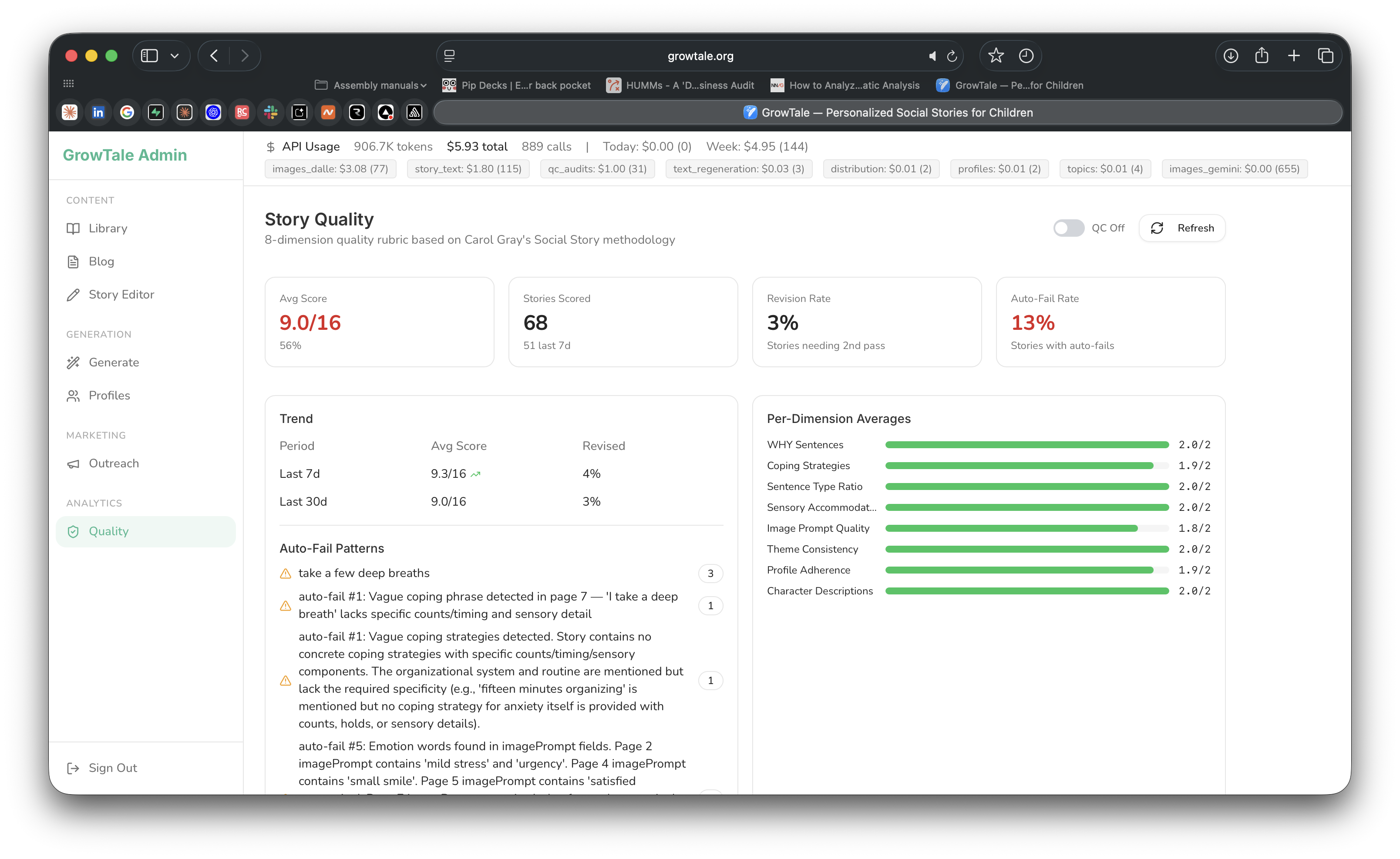
The feature I’m most proud of isn’t user-facing.
The system samples 1-in-25 stories and scores them across eight dimensions based on Carol Gray’s methodology:
- Why Sentences — specific consequences?
- Coping Strategies — concrete and actionable?
- Sentence Type Ratio — follows Gray’s framework? (60% descriptive, 30% perspective, 10% directive)
- Sensory Accommodation — addresses what the child may encounter?
- Image Prompt Quality — consistent character descriptions?
- Theme Consistency — stays focused on one learning objective?
- Profile Adherence — reflects the child’s interests, appearance, challenges?
- Character Descriptions — consistent across all pages?
Audience Strategy
Three audiences, one product, three stories about it:
- Parents: “Stories as unique as your child.” Pain point: time and personalization.
- Educators: “Stop sacrificing your weekends.” Pain point: scale across multiple students.
- Therapists: “Carol Gray methodology, automated.” Pain point: quality at speed.
The Results
Before
Phase 1: 2 months building a bloated native app that couldn't handle errors, failed on iOS, and required hiring a developer to fix. Shelved.
After
Phase 2: 3 weeks to production. Web-first, server-side rendering, credit-based model, admin tooling, daily shipping. 100% completion rate.
What This Demonstrates
GrowTale is a CX project. It started with user research, progressed through service design, and became a technology project when the right tools made that possible.
The role I played isn’t “developer.” It’s the same role I’ve always played: synthesize fragmented information into a cohesive framework, translate it into something people can use, and build the measurement systems to know whether it’s working.
What AI-assisted development changed wasn’t my thinking — it was my ability to execute on it. The design decisions are the same ones I would have briefed to a development team. The difference is I could iterate in real-time rather than waiting for sprint cycles.
The line between “strategist who designs products” and “builder who ships products” is blurring. Not because the skills are merging, but because the gap between knowing what to build and being able to build it has narrowed.
GrowTale is live at growtale.org.
What I’m most proud of isn’t the technology. It’s the moment when a child points at the illustration and says “that’s me.”